
&c2=rgba(0,0,0,.5)&c4=o-color-4&c5=o-color-5)
&c4=o-color-4&c5=o-color-5)
Skeleton Coast & Cape Cross Seal Colony
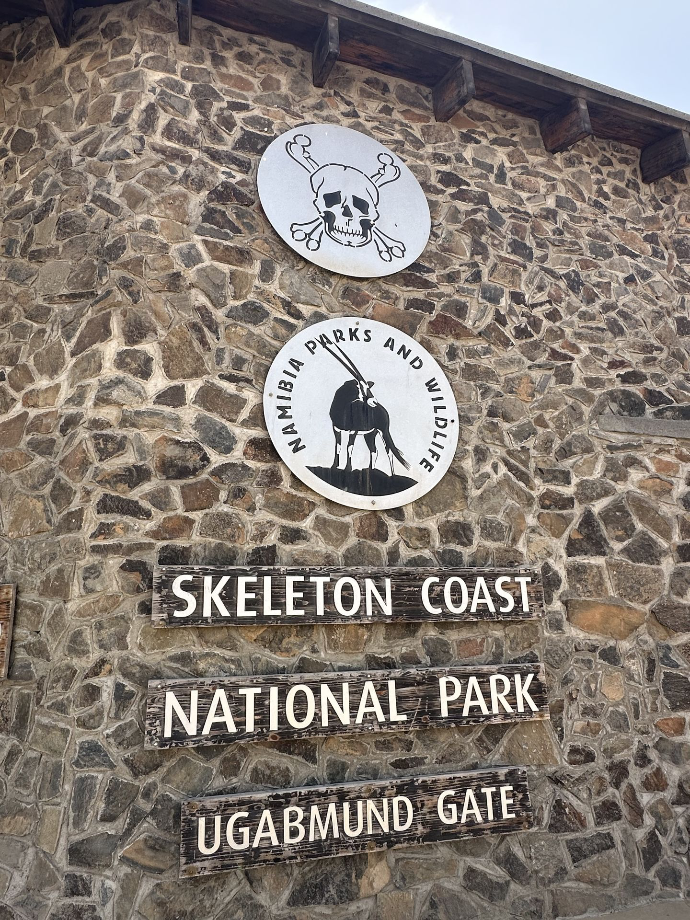
A full-day drive north from Swakopmund along the Atlantic coast into the Skeleton Coast National Park, with a stop at the Cape Cross seal colony, the Zeila shipwreck, salt pans, and ancient lichen fields.
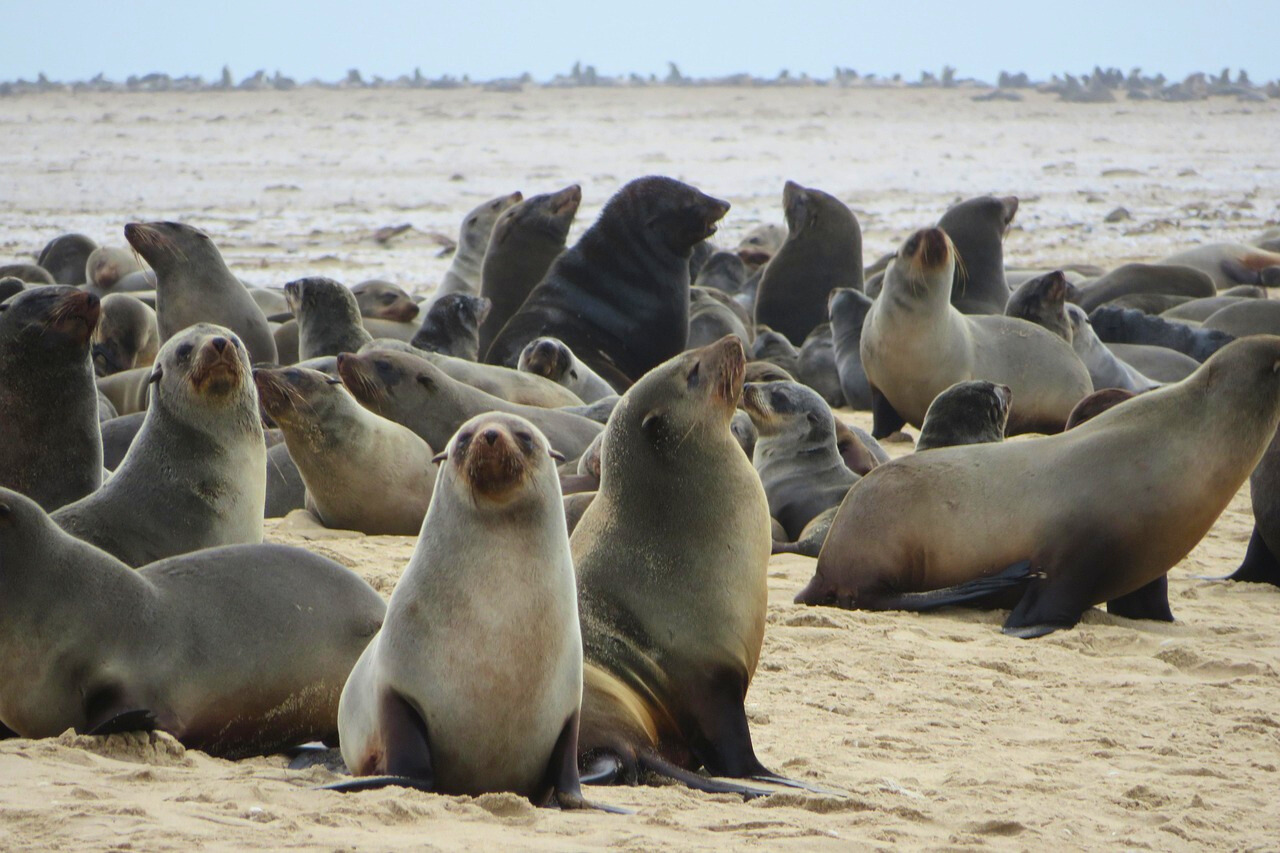
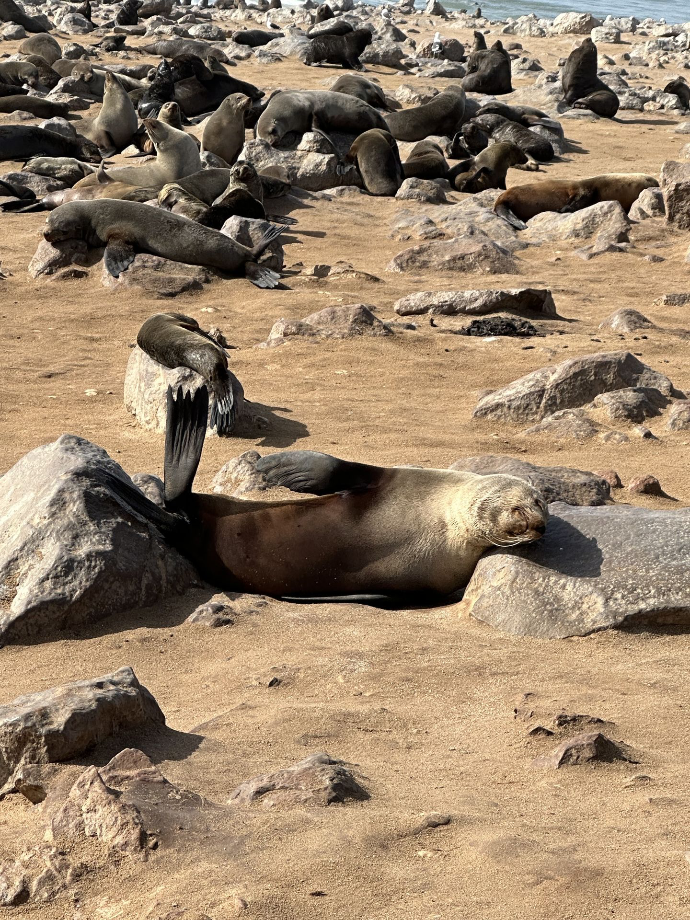
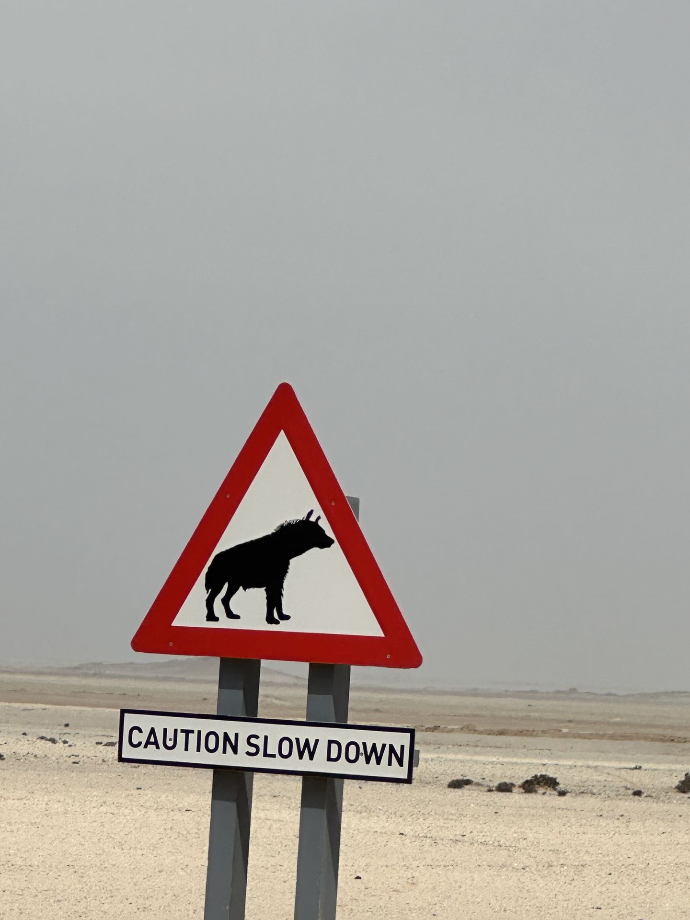
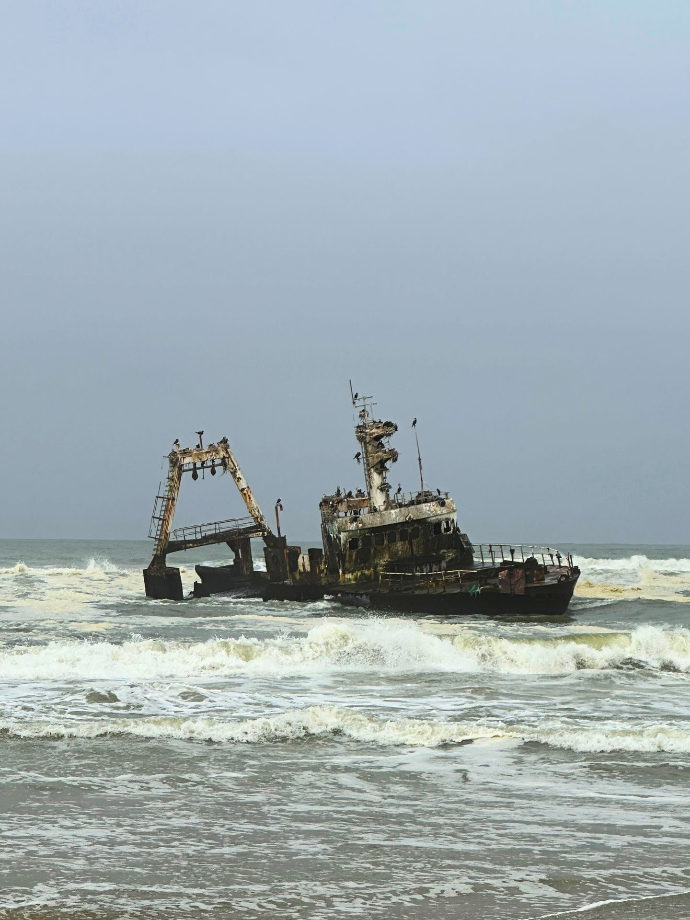
The route follows the coast past white salt pans and through Wlotzkasbaken (a handful of off-grid fishing huts with no electricity or running water) before reaching the Skeleton Coast proper. The Bushmen called this shoreline "The Land God Made in Anger," and the name stuck for a reason: thick fog, the cold Benguela Current, and rocky reef made it one of the deadliest stretches of coast in the world for sailing vessels. On the way you stop at the rusted hull of the Zeila, a fishing trawler that ran aground in 2008 and is slowly being taken apart by the surf. The main stop is Cape Cross, where roughly 200,000 Cape fur seals crowd onto the rocks and sand at peak season. You walk through the colony on boardwalks while your guide explains the breeding cycles, the territorial fights between bulls, and the jackals and hyenas that work the edges. On the way back, you pass through lichen fields where organisms survive on nothing but coastal fog and grow at about 1 mm per year.
The Seal Colony
Cape Cross is loud, it smells strong (there's no polite way around this), and the density of animals is hard to take in at first. Barking, honking, pups calling for mothers, bulls squaring off over territory during 6-week fasting periods. The cold Benguela Current pushes nutrient-rich water along this coast, which is why the colony is here and why it's this big. Black-backed jackals patrol the edges and occasionally a brown hyena shows up. Cape Cross also has a human history: in 1486, the Portuguese explorer Diogo Cão planted a stone cross here, one of the first European markers on the southern African coast. A replica still stands near the entrance.
The Shipwreck
The Zeila sits half-swallowed by surf and sand on the Skeleton Coast. The rusting hull against grey sky and white breakers makes a strong photo stop. Your guide covers the history of the Benguela Current and how this coastline earned its name over centuries of wrecked ships.
Salt Pans & Lichen Fields
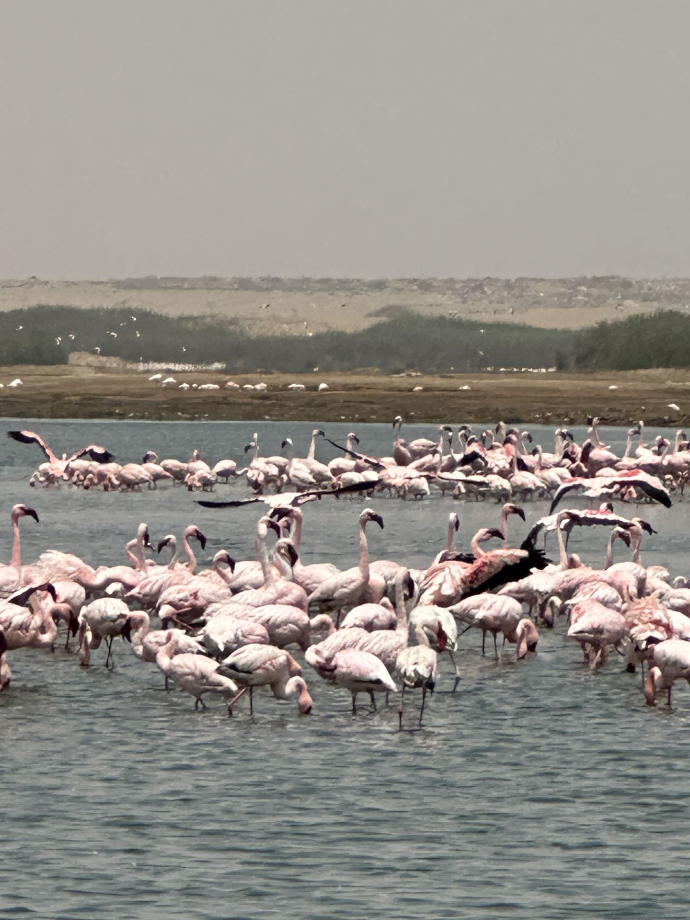
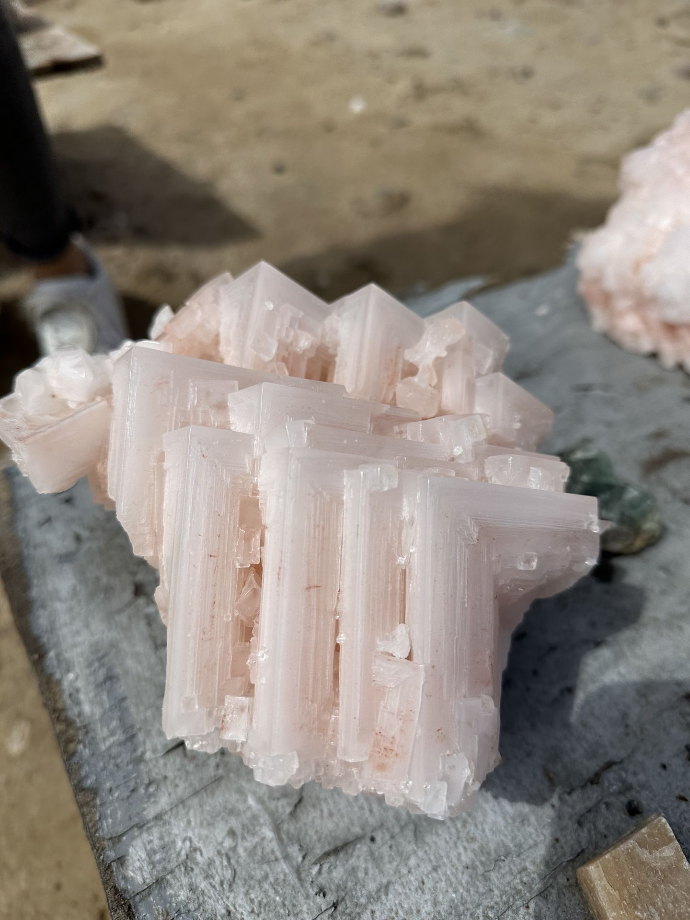
Two stops most visitors skip. The Swakopmund salt pans are flat white expanses where flamingos sometimes feed. The lichen fields are carpets of ancient organisms that survive entirely on fog moisture, growing at roughly 1 mm per year. Some of the patches you walk past are centuries old.
Itinerary
1
Pickup from Swakopmund or Walvis Bay
Your guide collects you from your accommodation in the morning.
2
Swakopmund Salt Pans
Photo stop, 20 minutes
White salt flats stretching to the horizon, with the Atlantic on one side and desert on the other. Watch for flamingos and other wading birds if conditions are right.
3
Wlotzkasbaken
Optional, 15 minutes
A cluster of off-grid holiday shacks on the coast. No electricity, no water mains. People come here to fish and be left alone.
4
Zeila Shipwreck
Sightseeing, 30 minutes
A quick stop at the Skeleton Coast to see the rusting hull of the Zeila trawler. Your guide shares the story of how this coast earned its name and why the Benguela Current makes it so dangerous.
5
Cape Cross Seal Reserve
Visit, 1 hour
Walk the boardwalks through the colony. Your guide covers the breeding cycles, the bull fights, and the jackals working the edges.
6
Lunch at Henties Bay
Optional, 50 minutes (own expense)
Sit-down lunch at a local restaurant in this small fishing town. Fresh fish is the obvious order. This stop is optional; bring your own food if you'd rather keep moving.
7
Lichen Fields
Sightseeing, 30 minutes
Walk among organisms that survive entirely on coastal fog. Some of these lichen patches are hundreds of years old, growing at barely 1 mm per year.
8
Return to Swakopmund / Walvis Bay
Drop-off at your accommodation.
What's Included
✔️ Guided tour of the Skeleton Coast
✔️ Cape Cross Seal Colony entry
✔️ Visit to the Zeila Shipwreck
✔️ Drive through Henties Bay & salt pans
✔️ Lichen fields exploration
✔️ Private vehicle and expert guide
✔️ Hotel pickup & drop-off (Swakopmund / Walvis Bay)
What to bring
- Water bottle
- Camera
- Sunscreen
- Hat
- Comfortable shoes
- Warm layers
Good to know
The Skeleton Coast can be cold, even in summer. Fog rolls in without warning and the Atlantic wind cuts through thin clothing. Dress in layers, bring a windbreaker, and don't count on sunshine. The coast has its own microclimate that ignores whatever the weather is doing 30 km inland.
Wildlife sightings beyond the seals (jackals, ostriches, springbok) are likely but not guaranteed. This is wild Namibia, not a zoo!
The seal colony boardwalk is accessible but involves standing and walking on uneven surfaces. This tour is not recommended for guests who have difficulty walking on uneven ground.
Get a personalized quote
You eat lunch among the granite peaks themselves, surrounded by silence and orange stone. No restaurant, no dashboard sandwich. Just rock, sky, and the occasional rustle of a lizard.