Botswana
Where the wild still writes the rules
Botswana does not try to impress you. It does not need to. This is a country where a third of the land is set aside for wildlife, where the Okavango Delta floods an entire desert every year, and where elephant herds number in the tens of thousands. The scale of it is not something you read about and understand. It is something you arrive at and feel.
It is one of the least densely populated countries in Africa, with just over two million people spread across a landmass the size of France. Outside the capital Gaborone and a few regional towns, the country is defined by open space: vast salt pans, deep Kalahari sands, and waterways that shift and shimmer with the seasons. This is not a destination built for mass tourism. The government has deliberately kept visitor numbers low and quality high, which means fewer camps, smaller groups, and experiences that feel genuinely private.
Botswana gained independence from Britain in 1966 and has since become one of Africa's most stable democracies, funding much of its development through diamond revenues and a growing safari economy. The conservation model here is built on the understanding that wild land has real economic value, and the results speak for themselves: wildlife populations are healthy, poaching rates are among the lowest on the continent, and the wilderness you encounter is as close to untouched as anywhere in southern Africa.
Highlights
Okavango Delta
The Okavango is the world's largest inland delta, a place where the floodwaters of the Angolan highlands spread across the Kalahari sand to create a shifting mosaic of channels, lagoons, and islands. The water arrives during the dry season, drawing wildlife in from the surrounding bush. Gliding through the channels in a traditional mokoro while elephants wade through the shallows beside you is one of the defining experiences of African travel.

Chobe National Park
Chobe holds one of the largest concentrations of elephants on earth, with an estimated 120,000 moving through the park and its surroundings. The Chobe River frontage is the centrepiece: during the dry months, herds of several hundred elephants gather along the banks to drink and bathe, while hippos, crocodiles, and buffalo share the water. A sunset boat cruise along the Chobe River is one of southern Africa's great wildlife experiences.

Makgadikgadi Pans
The Makgadikgadi is one of the largest salt flat systems in the world, a vast expanse of cracked white earth that stretches to the horizon in every direction. During the wet season, the pans flood and attract enormous herds of zebra and wildebeest on one of Africa's last great migrations. In the dry months, the emptiness is almost total, and the silence at night, under skies unbroken by any light, is something you carry with you long afterwards.

Moremi Game Reserve
Moremi sits at the heart of the Okavango Delta and is often ranked among the finest game reserves in Africa. It combines permanent water, seasonal floodplains, dry woodland, and open grassland in a single reserve, which means the diversity of wildlife here is exceptional. Leopard, wild dog, lion, and cheetah all share this territory, and the birdlife along the waterways is extraordinary. The mix of land and water safari makes it unlike anywhere else.

Central Kalahari Game Reserve
The Central Kalahari is one of the largest protected areas in the world, a vast sweep of golden grassland, ancient fossil riverbeds, and Kalahari bush that most visitors never see. After good rains, the fossil valleys turn green and attract huge herds of springbok, gemsbok, and wildebeest, followed by black-maned Kalahari lions. The San people have lived here for thousands of years, and the reserve carries their presence in its very landscape.

Savuti
Savuti is wild, unpredictable country in the southwestern corner of Chobe National Park. The Savuti Channel, which has a history of mysteriously drying up and flowing again over decades, carves through open bush where large lion prides hunt elephant and buffalo. The marsh area draws massive herds during the rains, and the predator action here is among the most intense in Botswana. This is a place for those who want their safari raw and unfiltered.

Tsodilo Hills
The Tsodilo Hills are a cluster of quartzite hills rising abruptly from the flat Kalahari in the northwest. They hold over 4,500 rock paintings, one of the highest concentrations of rock art anywhere in the world, and are considered a sacred site by the San people. The hills have been a place of spiritual significance for at least 100,000 years. UNESCO lists them as a World Heritage Site, and the experience of walking through their galleries is both humbling and deeply moving..

Nata Bird Sanctuary
When the Makgadikgadi Pans fill with water during the summer rains, the Nata Bird Sanctuary on the northeastern shore becomes one of the most important flamingo breeding sites in southern Africa. Tens of thousands of greater and lesser flamingos gather here, turning the water pink in a spectacle that rivals anything in East Africa. Pelicans, herons, and dozens of other waterbird species join the gathering. It is a birdwatcher's paradise in the most unlikely of settings.

Geography
Botswana sits in the heart of southern Africa, landlocked and bordered by Namibia to the west and north, South Africa to the south, and Zimbabwe to the northeast. A small section of the northern border touches Zambia at Kazungula, one of the few places on earth where four countries meet at a single point.
The Kalahari Desert dominates the country, covering roughly 70 percent of the total land area. But this is not the empty sand desert of popular imagination. The Kalahari is a vast semi-arid basin of red and golden sand, covered in scrubby bush, scattered trees, and grasslands that turn surprisingly green after the rains. It supports an impressive range of wildlife, including large predators, and the San people have called it home for tens of thousands of years.
In the northwest, the Okavango River flows in from Angola and spreads across the Kalahari sands to form the Okavango Delta, a vast inland delta that covers up to 22,000 square kilometres at peak flood. The water never reaches the sea. Instead, it evaporates and is absorbed by the desert, creating a lush, shifting wetland that is one of the most biodiverse ecosystems in Africa.
The northeast is defined by the Chobe River and its floodplains, forming the border with Namibia before joining the Zambezi. This is Botswana's wettest corner, with thick riverine forest and permanent water that supports enormous concentrations of elephants and other large mammals.
In the east, the Makgadikgadi Pans form one of the largest salt flat systems in the world, the remnants of a vast ancient lake that once covered much of northern Botswana. During the dry season, the pans are a blinding white emptiness. When the rains come, they transform into shallow lakes teeming with flamingos and migrating herds.


Geology
Botswana sits on the Kalahari Craton, one of the oldest and most stable pieces of continental crust on earth, with basement rocks dating back over 2.5 billion years. This ancient foundation is buried beneath the sands of the Kalahari, which means the country's surface geology is dominated by relatively young sediments, even though what lies beneath is some of the oldest rock on the planet.
The Kalahari sands themselves are a geological feature of considerable interest. They extend far beyond Botswana's borders into Namibia, South Africa, Zimbabwe, and beyond, forming one of the largest continuous sand bodies in the world. These sands were deposited over millions of years by wind and water, and in places they reach depths of over 100 metres.
The Makgadikgadi Pans are the remnants of Lake Makgadikgadi, a vast inland sea that covered an area the size of Switzerland roughly two million years ago. As the climate dried and the rivers that fed it shifted course, the lake shrank and eventually disappeared, leaving behind the enormous salt flats we see today. The pans sit on ancient lake bed sediments rich in mineral deposits.
The Okavango Delta is a geological puzzle. The delta sits in a graben, a down-faulted block of the earth's crust created by tectonic activity along the southern extension of the East African Rift System. This subsidence is what allows the water to spread rather than flow through, creating the unique inland delta. The faulting is still active, which means the shape and flow of the delta are slowly changing over geological time.
Botswana's diamond wealth, the foundation of much of the country's modern prosperity, comes from kimberlite pipes that punched through the ancient craton between 80 and 90 million years ago, carrying diamonds formed deep in the earth's mantle to the surface. The Orapa and Jwaneng mines are among the richest in the world.
Explore our itineraries in Botswana
Check out our trips, and feel free to ask us to personalize it based on what you'd like to see and visit!
Demographics and People
Botswana has a population of around 2.4 million people spread across a country roughly the size of France. That works out to just over three people per square kilometre, making it one of the most sparsely populated nations in Africa. The vast majority of the population is concentrated in the eastern corridor, between Gaborone in the south and Francistown in the north, while the western Kalahari and the delta regions remain very thinly settled.
The Tswana people are the dominant ethnic group, making up roughly 80 percent of the population and giving the country its name. Botswana literally means "land of the Tswana." The Tswana are a Bantu-speaking people organised into several major groups, including the Bangwato, Bakwena, Bangwaketse, and Batawana, each historically associated with a particular region and led by a hereditary chief or kgosi.
The San, also known as Basarwa in Botswana, are among the oldest inhabitants of the region, with a presence stretching back tens of thousands of years. They are traditionally hunter-gatherers whose intimate knowledge of the Kalahari landscape is unmatched. Their situation in modern Botswana is complex: government policies have relocated many San communities from their ancestral lands in the Central Kalahari, a process that has drawn international criticism and legal challenges.
The Kalanga people are concentrated in the northeast and have cultural and linguistic ties to the Shona of Zimbabwe. The Herero, Mbukushu, Sbiuya, and Yei peoples of the northwest and northern regions bring further cultural diversity, with traditions linked to cattle herding, fishing, and river life along the Okavango and Chobe.
English is the official language and the medium of instruction in schools, but Setswana is the national language and by far the most widely spoken. In the north and west, several other languages are used daily, reflecting the ethnic diversity of those regions.
Gaborone, the capital, has grown rapidly since independence and is now a modern, functional city of around 250,000 people, with a wider metropolitan area considerably larger. It is the economic and political centre of the country, though it retains a relatively quiet, low-rise character compared to the capitals of larger African nations.


Culture and Traditions
Botswana's cultural identity is built on the concept of botho, a word that roughly translates as respect, humility, and consideration for others. It is the Tswana equivalent of ubuntu, and it runs through everyday interactions, community life, and the country's approach to governance. The kgotla, a traditional community meeting where all voices are heard and disputes are resolved through discussion, remains an active institution in villages across the country.
Cattle are central to Tswana culture in ways that go well beyond economics. Cattle represent wealth, status, and social connection. The lobola (bride price) tradition involves cattle, and a person's standing in the community is still partly measured by the size of their herd. The attachment to cattle is visible everywhere, from the fenced kraals in every village to the cattle crossing signs on every road.
Music and dance are woven into daily life and ceremony. Traditional Tswana music features call-and-response singing, hand clapping, and the rhythmic stamping of feet. The phathisi dance, performed at celebrations and gatherings, is a communal expression of joy and unity. In the north, the music and dance traditions of the river peoples bring a different character, with drumming and movements that reflect the rhythms of water and fishing life.
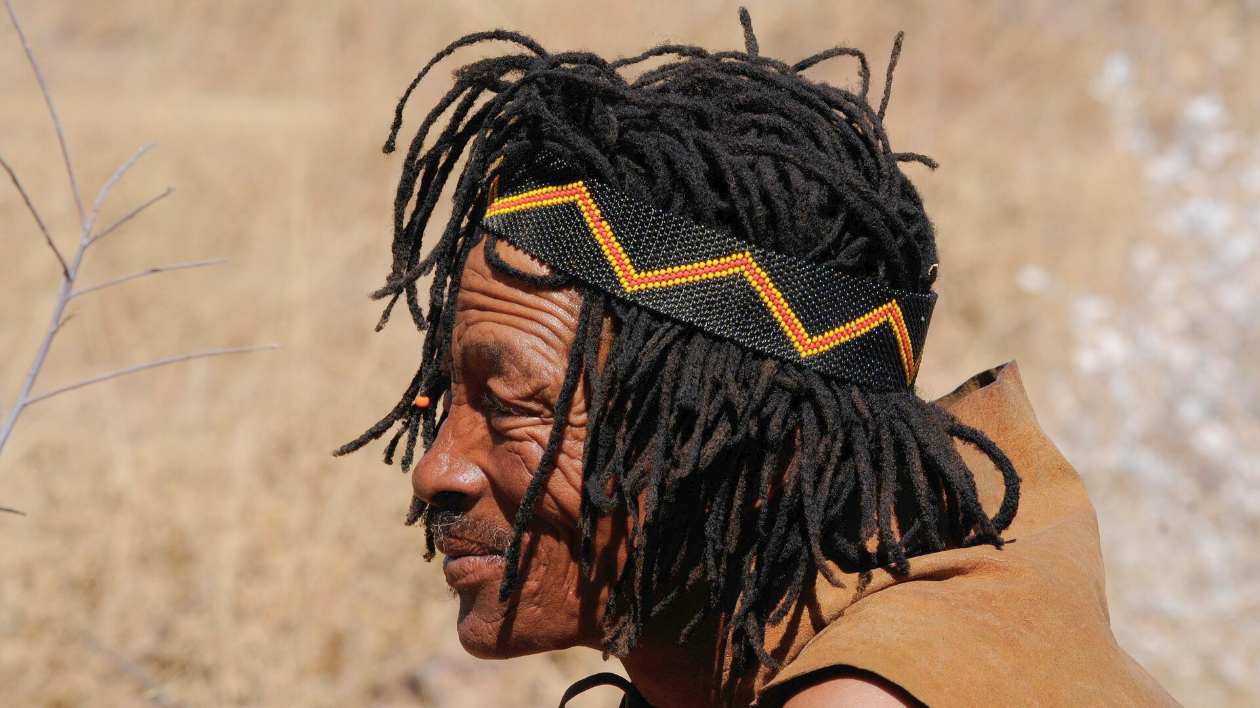
The San communities of the Kalahari hold some of the oldest cultural traditions on earth. Their trance healing dance, in which healers enter an altered state to draw out sickness and restore balance, is believed to be one of humanity's most ancient ritual practices. San rock art, found in sheltered overhangs across the region, records these spiritual experiences in images that are thousands of years old.
Craft traditions vary across regions. Basketry from the Okavango Delta region, particularly from the Bayei and Hambukushu peoples, is among the finest in Africa. The coiled baskets are woven from palm leaves and decorated with natural dyes in patterns that carry cultural meaning. Pottery, beadwork, and woodcarving are practised in various parts of the country and sold at local markets and cooperatives.
Experience the Living Cultures of Botswana
Botswana is not only vast wilderness and extraordinary wildlife. It is also home to one of Africa's oldest living cultures and a society built on respect and community.
With Onaluru Safari and Tours, you experience the country through meaningful encounters, guided with respect and local knowledge.
Food and Drink
Botswana's food culture is rooted in simplicity, generosity, and the land itself. Meals are built around meat, grain, and whatever the season provides, and the best cooking in the country happens not in restaurants but around fires and in family kitchens.
Seswaa is the national dish and the one thing every visitor should try. It is slow-cooked beef or goat, boiled until tender, then shredded and pounded until it falls apart. Served with pap (a thick maize porridge) or sorghum, it is comfort food at its most fundamental. Seswaa is the dish that appears at weddings, funerals, public holidays, and any gathering of significance.
Braai is as central to Botswana as it is to the rest of southern Africa. Cooking meat over an open fire is the social institution that holds life together, and the quality of Botswana's free-range beef makes it particularly satisfying here. The cuts are generous, the fires burn slowly, and the conversations that happen around them are as much a part of the experience as the food.
Morogo is wild spinach, cooked down with onion and tomato into a side dish that accompanies many meals in rural and urban households alike. Dried mopane worms, the caterpillar of the Emperor moth, are a high-protein traditional food eaten across northern Botswana, served dried and crunchy as a snack or rehydrated and cooked into a rich stew.
Vetkoek (fried dough bread) and fat cakes are popular street foods across the country, often filled with mince or served with jam. The influence of South African food culture is strong, particularly in Gaborone and the eastern towns, where chain restaurants and fast food sit alongside traditional vendors.
Traditional sorghum beer, brewed at home and sold informally, is the social drink of rural Botswana. It is thick, slightly sour, and shared from a communal vessel. Commercially, St Louis and Castle Lager are the most popular choices, and a growing number of craft options are appearing in Gaborone. On safari, the sundowner, a cold drink served while watching the sun set over the bush, is one of those rituals that never gets old.


Conservation and Wildlife
Botswana has one of the strongest conservation records in Africa, with roughly 40 percent of its total land area set aside as national parks, game reserves, and wildlife management areas. The government's approach has been to keep tourism low-volume and high-value, which means fewer visitors, less environmental pressure, and a genuine sense of wilderness across the country's protected areas.
The elephant population tells the story most vividly. Botswana is home to an estimated 130,000 elephants, the largest population of any country on earth. The herds move freely across vast corridors connecting the Okavango Delta, Chobe, and the Makgadikgadi, and their numbers have recovered dramatically since the hunting ban introduced in 2014. The management of these populations is an ongoing and sometimes contentious debate within Botswana, balancing conservation goals with the realities of human-wildlife conflict in farming communities.
The Okavango Delta is a UNESCO World Heritage Site and one of the most closely monitored ecosystems in Africa. The Permanent Okavango River Basin Water Commission (OKACOM), shared between Botswana, Namibia, and Angola, works to manage the river system that feeds the delta, ensuring that upstream development does not compromise the downstream ecology.
Anti-poaching efforts in Botswana are among the most aggressive on the continent. The Botswana Defence Force is directly involved in wildlife protection, and the country's shoot-to-kill policy against poachers, while controversial internationally, reflects the seriousness with which Botswana treats the defence of its wildlife. Rhino populations in particular have benefited from this approach.
Community-based natural resource management (CBNRM) gives local communities legal rights over the wildlife on their land and a financial share of tourism revenues. The model has been particularly successful in areas bordering the major parks, where villages that once saw wildlife as a threat to livestock now see it as an economic asset.
Explore our itineraries in Botswana
Check out our trips, and feel free to ask us to personalize it based on what you'd like to see and visit!
Want to discuss your next trip in Botswana?
Get in touch with our expert tour coordinator, they can answer all your questions and suggest itinerary to match your best expectations. Drop us a line, we will get back to you asap!